Skip to content

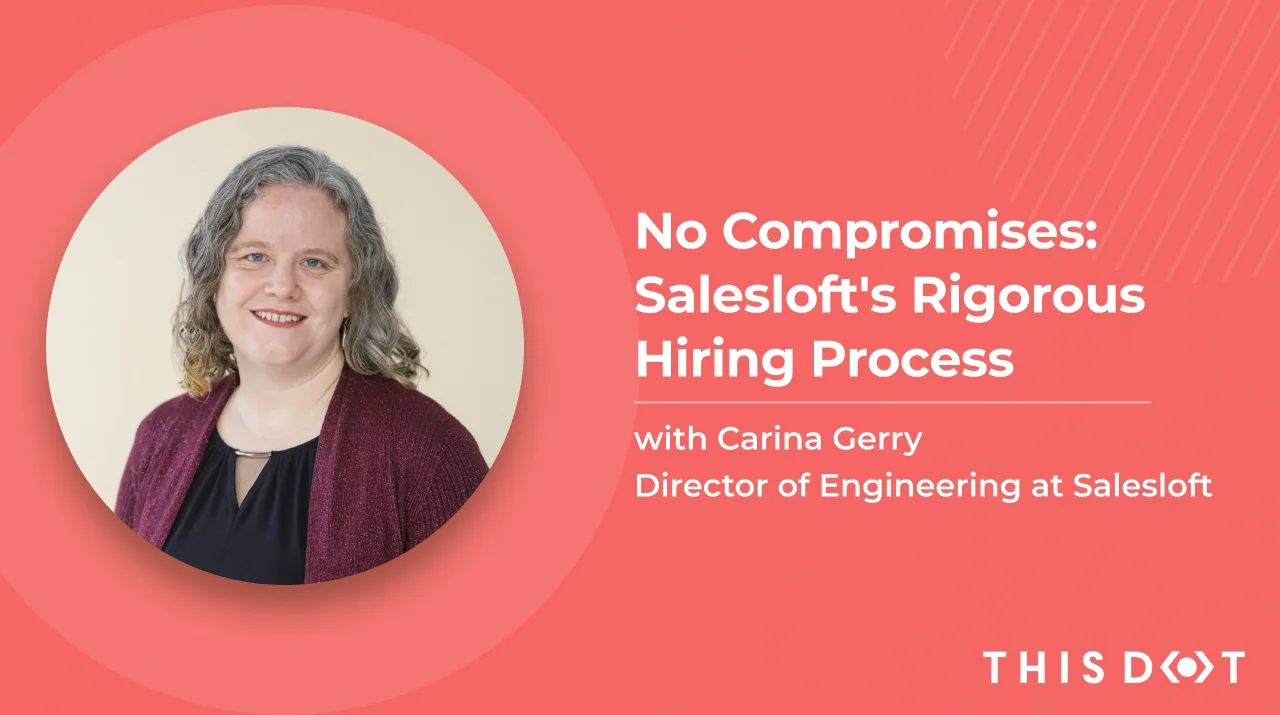
No Compromises: Salesloft's Rigorous Hiring Process with Carina Gerry, Director of Engineering

No Compromises: Salesloft's Rigorous Hiring Process with Carina Gerry, Director of Engineering

This article was written over 18 months ago and may contain information that is out of date. Some content may be relevant but please refer to the relevant official documentation or available resources for the latest information.

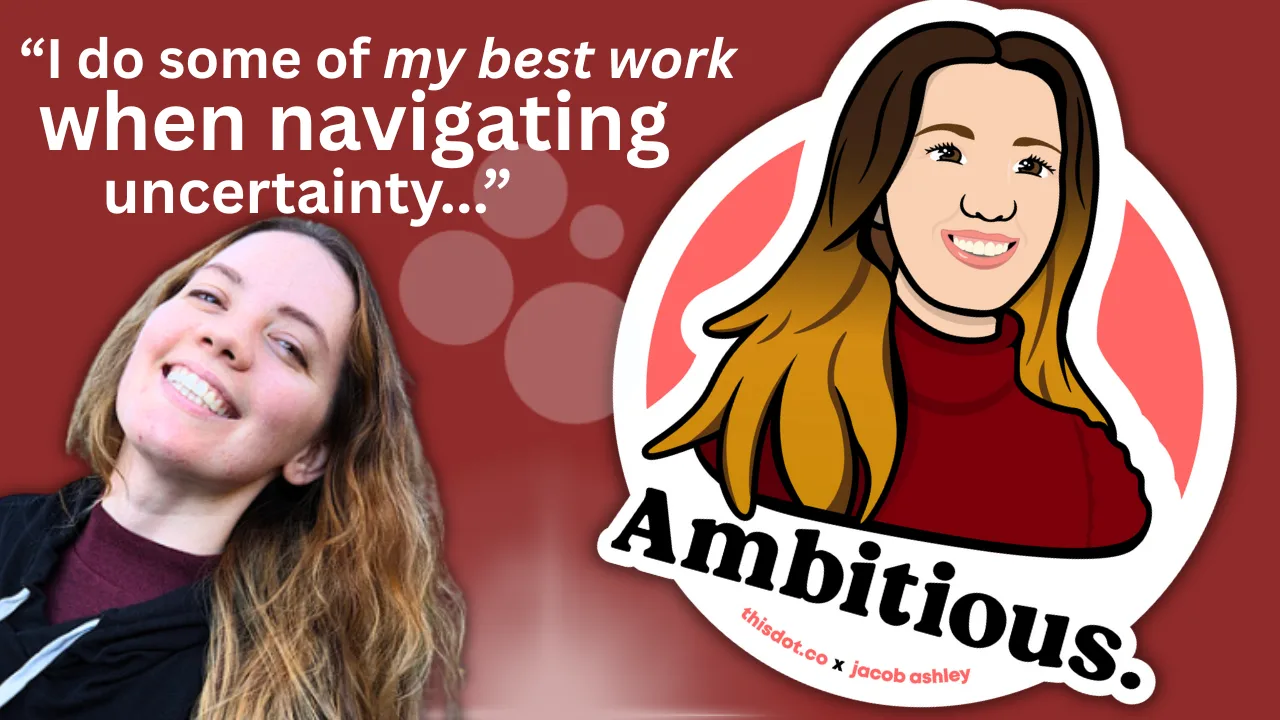
In this episode of the Engineering Leadership Series, host Tracy Lee welcomes Carina Gerry, the Director of Engineering at Salesloft. SalesLoft, known for its excellent workplace culture, has grown significantly during Carina's tenure, now boasting nearly 800 employees, a substantial increase from the 70 employees when she first joined.

Carina's career at Salesloft began as the first QA team hire, where she played a pivotal role in building the QA department and later transitioned into managing engineering teams. Two years ago, she assumed the role of Director of Engineering.

Salesloft places a strong emphasis on its core values to define its culture. These values include "team over self," "glass half full," "customer first," "bias towards action," and "focused on results." Carina emphasizes that these values are more than just words; they serve as the foundation for the type of people who succeed at Salesloft.

Carina strongly believes that hiring the right people is the key to a company's success. Carina adopts a rigorous hiring approach, where if a candidate doesn't receive a resounding "hell yes," it's considered a "no." This approach ensures that Salesloft hires candidates who truly align with the company's culture and values.

To combat bias in the hiring process, Carina encourages self-awareness among interviewers. She advises interviewers to be conscious of any snap judgments they might make and to ask themselves why they feel a certain way about a candidate. Additionally, Salesloft seeks to anonymize resumes, removing any information that might introduce bias, such as names, educational backgrounds, or graduation years.

Carina covered the intricacies of Salesloft’s comprehensive hiring process, which includes recruiter screens, technical skills interviews, peer interviews, core values interviews, resume interviews, executive interviews, and reference checks. The process aims to thoroughly evaluate a candidate's skills, cultural fit, and track record.

One interesting aspect of Salesloft’s hiring process is the emphasis on negative questions. Instead of focusing solely on accomplishments, interviewers ask candidates about their experiences with difficult situations or dysfunctional teams. This approach helps reveal a candidate's empathy, problem-solving abilities, and resilience in challenging circumstances.

The technical interview at Salesloft consists of a code review, where candidates assess and provide feedback on a piece of code. This approach ensures that candidates are comfortable discussing code and allows for an assessment of their problem-solving and communication skills.

Carina also shares valuable insights into how the interview process helps identify candidates who can align with Salesloft’s core values. She highlights the importance of empathy, a glass-half-full mindset, and the ability to take initiative as key qualities that make a candidate stand out.

The resume interview is a thorough examination of a candidate's career history, going back to high school or early experiences. The goal is to understand a candidate's track record, decision-making processes, and reasons for leaving previous positions. By asking candidates to share high and low points in their careers, Salesloft gains valuable insights into their personalities and motivations.

Carina’s commitment to finding the right people for Salesloft, while eliminating bias, has led to a strong and vibrant company culture. The thorough hiring process at Salesloft ensures that candidates not only possess the necessary skills but also align with the company's core values.
This Dot is a consultancy dedicated to guiding companies through their modernization and digital transformation journeys. Specializing in replatforming, modernizing, and launching new initiatives, we stand out by taking true ownership of your engineering projects.

We love helping teams with projects that have missed their deadlines or helping keep your strategic digital initiatives on course. Check out our case studies and our clients that trust us with their engineering.

You might also like

AI Is Speeding Up Development. But Where Are the New Bottlenecks? cover image

AI Is Speeding Up Development. But Where Are the New Bottlenecks?

AI is accelerating development, but it’s also exposing everything else that’s broken. At the Leadership Exchange, leaders unpacked how AI is reshaping the SDLC and what organizations need to address beyond just coding to make adoption successful. Moderated by Rob Ocel, VP of Innovation at This Dot Labs, the panel featured Itai Gerchikov at Anthropic and Harald Kirschner, Principal Product Manager for GitHub Copilot & VS Code at Microsoft. Panelists explored the current state of AI adoption across the software development lifecycle and shared practical insights into how organizations can effectively integrate AI tools. Panelists discussed how companies are investing in AI tools, skills, and managed competency programs to support developers. While AI can dramatically accelerate coding, the panel emphasized that adoption affects every stage of the SDLC. Bottlenecks now appear in testing, DevOps, product delivery, and marketing as AI speeds up development. Organizations that address technical debt and process inefficiencies are better positioned to extract maximum value from AI tools. The conversation also focused on opportunities and risks. Security, governance, and workforce education were highlighted as critical factors for adoption. Panelists stressed that AI initiatives should be aligned with broader business goals rather than pursued in isolation. They noted that companies experimenting at the cutting edge need to consider organizational readiness just as carefully as technical capabilities. Panelists also explored how leading organizations are navigating the early stages of adoption. Those ahead of the curve are using structured experimentation, prioritizing process improvements, and continuously evaluating outcomes to refine their AI strategies. Learning from these early adopters allows other organizations to anticipate emerging trends and prepare for the next phase of AI adoption rather than simply replicating past approaches. Key Takeaways - Investing in AI skills and tools should be done thoughtfully, with clear alignment to business objectives. - Examining the full SDLC helps identify bottlenecks that AI may accelerate or expose. - Organizations can gain a competitive advantage by learning from early adopters and planning for where AI adoption is heading. AI adoption is not just a technical initiative; it is a strategic transformation that requires attention to people, process, and technology. Organizations that balance innovation with operational discipline will be best positioned to capture the full potential of AI across the software lifecycle. Seeing similar challenges in your own SDLC? Let’s compare notes. Join us at an upcoming Leadership Exchange or reach out to continue the conversation. Tracy can be reached at tlee@thisdot.co....

“ChatGPT knows me pretty well… but it drew me as a white man with a man bun.” – Angie Jones on AI Bias, DevRel, and Block’s new open source AI agent “goose” cover image

“ChatGPT knows me pretty well… but it drew me as a white man with a man bun.” – Angie Jones on AI Bias, DevRel, and Block’s new open source AI agent “goose”

Angie Jones is a veteran innovator, educator, and inventor with over twenty years of industry experience and twenty-seven digital technology patents both domestically and internationally. As the VP of Developer Relations at Block, she facilitates developer training and enablement, delivering tools for developer users and open source contributors. However, her educational work doesn’t end with her day job. She is also a contributor to multiple books examining the intersection of technology and career, including *DevOps: Implementing Cultural Change*, and *97 Things Every Java Programmer Should Know*, and is an active speaker in the global developer conference circuit. With the release of Block’s new open source AI agent “goose”, Angie drives conversations around AI’s role in developer productivity, ethical practices, and the application of intelligent tooling. We had the chance to talk with her about the evolution of DevRel, what makes a great leader, emergent data governance practices, women who are crushing it right now in the industry, and more: Developer Advocacy is Mainstream A decade ago, Developer Relations (DevRel) wasn’t the established field it is today. It was often called Developer Evangelism, and fewer companies saw the value in having engineers speak directly to other engineers. > “Developer Relations was more of a niche space. It’s become much more mainstream these days with pretty much every developer-focused company realizing that the best way to reach developers is with their peers.” That shift has opened up more opportunities for engineers who enjoy teaching, community-building, and breaking down complex technical concepts. But because DevRel straddles multiple functions, its place within an organization remains up for debate—should it sit within Engineering, Product, Marketing, or even its own department? There’s no single answer, but its cross-functional nature makes it a crucial bridge between technical teams and the developers they serve. Leadership Is Not an Extension of Engineering Excellence Most engineers assume that excelling as an IC is enough to prepare them for leadership, but Angie warns that this is a common misconception. She’s seen firsthand how technical skills don’t always equate to strong leadership abilities—we’ve all worked under leaders who made us wonder *how they got there*. When she was promoted into leadership, Angie was determined not to become one of those leaders: > “This required humility. Acknowledging that while I was an expert in one area, I was a novice in another.” Instead of assuming leadership would come naturally, she took a deliberate approach to learning—taking courses, reading books, and working with executive coaches to build leadership skills the right way. Goose: An Open Source AI Assistant That Works for You At Block, Angie is working on a tool called goose, an open-source AI agent that runs locally on your machine. Unlike many AI assistants that are locked into specific platforms, goose is designed to be fully customizable: > “You can use your LLM of choice and integrate it with any API through the Model Context Protocol (MCP).” That flexibility means goose can be tailored to fit developers’ workflows. Angie gives an example of what this looks like in action: > “Goose, take this Figma file and build out all of the components for it. Check them into a new GitHub repo called @org/design-components and send a message to the #design channel in Slack informing them of the changes.” And just like that, it’s done— no manual intervention required. The Future of Data Governance As AI adoption accelerates, data governance has become a top priority for companies. Strong governance requires clear policies, security measures, and accountability. Angie points out that organizations are already making moves in this space: > “Cisco recently launched a product called AI Defense to help organizations enhance their data governance frameworks and ensure that AI deployments align with established data policies and compliance requirements.” According to Angie, in the next five years, we can expect more structured frameworks around AI data usage, especially as businesses navigate privacy concerns and regulatory compliance. Bias in AI Career Tools: Helping or Hurting? AI-powered resume screeners and promotion predictors are becoming more common in hiring, but are they helping or hurting underrepresented groups? Angie’s own experience with AI bias was eye-opening: > “I use ChatGPT every day. It knows me pretty well. I asked it to draw a picture of what it thinks my current life looks like, and it drew me as a white male (with a man bun).” When she called it out, the AI responded: > “No, I don’t picture you that way at all, but it sounds like the illustration might’ve leaned into the tech stereotype aesthetic a little too much.” This illustrates a bigger problem— AI often reflects human biases at scale. However, there are emerging solutions, such as identity masking, which removes names, race, and gender markers so that only skills are evaluated. > “In scenarios like this, minorities are given a fairer shot.” It’s a step toward a more equitable hiring process, but it also surfaces the need for constant vigilance in AI development to prevent harmful biases. Women at the Forefront of AI Innovation While AI is reshaping nearly every industry, women are playing a leading role in its development. Angie highlights several technologists: > “I’m so proud to see women are already at the forefront of AI innovation. I see amazing women leading AI research, training, and development such as Mira Murati, Timnit Gebru, Joelle Pineau, Meredith Whittaker, and even Block’s own VP of Data & AI, Jackie Brosamer.” These women are influencing not just the technical advancements in AI but also the ethical considerations that come with it. Connect with Angie Angie Jones is an undeniable pillar of the online JavaScript community, and it isn’t hard to connect with her! You can find Angie on X (Twitter), Linkedin, or on her personal site (where you can also access her free Linkedin Courses). Learn more about goose by Block. Sticker Illustration by Jacob Ashley...

Vercel BotID: The Invisible Bot Protection You Needed cover image

Vercel BotID: The Invisible Bot Protection You Needed

Nowadays, bots do not act like “bots”. They can execute JavaScript, solve CAPTCHAs, and navigate as real users. Traditional defenses often fail to meet expectations or frustrate genuine users. That’s why Vercel created BotID, an invisible CAPTCHA that has real-time protections against sophisticated bots that help you protect your critical endpoints. In this blog post, we will explore why you should care about this new tool, how to set it up, its use cases, and some key considerations to take into account. We will be using Next.js for our examples, but please note that this tool is not tied to this framework alone; the only requirement is that your app is deployed and running on Vercel. Why Should You Care? Think about these scenarios: - Checkout flows are overwhelmed by scalpers - Signup forms inundated with fake registrations - API endpoints draining resources with malicious requests They all impact you and your users in a negative way. For example, when bots flood your checkout page, real customers are unable to complete their purchases, resulting in your business losing money and damaging customer trust. Fake signups clutter the app, slowing things down and making user data unreliable. When someone deliberately overloads your app’s API, it can crash or become unusable, making users angry and creating a significant issue for you, the owner. BotID automatically detects and filters bots attempting to perform any of the above actions without interfering with real users. How does it work? A lightweight first-party script quickly gathers a high set of browser & environment signals (this takes ~30ms, really fast so no worry about performance issues), packages them into an opaque token, and sends that token with protected requests via the rewritten challenge/proxy path + header; Vercel’s edge scores it, attaches a verdict, and checkBotId() function simply reads that verdict so your code can allow or block. We will see how this is implemented in a second! But first, let’s get started. Getting Started in Minutes 1. Install the SDK: ` 1. Configure redirects Wrap your next.config.ts with BotID’s helper. This sets up the right rewrites so BotID can do its job (and not get blocked by ad blockers, extensions, etc.): ` 2. Integrate the client on public-facing pages (where BotID runs checks): Declare which routes are protected so BotID can attach special headers when a real user triggers those routes. We need to create instrumentation-client.ts (place it in the root of your application or inside a src folder) and initialize BotID once: ` instrumentation-client.ts runs before the app hydrates, so it’s a perfect place for a global setup! If we have an inferior Next.js version than 15.3, then we would need to use a different approach. We need to render the React component inside the pages or layouts you want to protect, specifying the protected routes: ` 3. Verify requests on your server or API: ` - NOTE: checkBotId() will fail if the route wasn’t listed on the client, because the client is what attaches the special headers that let the edge classify the request! You’re all set - your routes are now protected! In development, checkBotId() function will always return isBot = false so you can build without friction. To disable this, you can override the options for development: ` What happens on a failed check? In our example above, if the check failed, we return a 403, but it is mostly up to you what to do in this case; the most common approaches for this scenario are: - Hard block with a 403 for obviously automated traffic (just what we did in the example above) - Soft fail (generic error/“try again”) when you want to be cautious. - Step-up (require login, email verification, or other business logic). Remember, although rare, false positives can occur, so it’s up to you to determine how you want to balance your fail strategy between security, UX, telemetry, and attacker behavior. checkBotId() So far, we have seen how to use the property isBot from checkBotId(), but there are a few more properties that you can leverage from it. There are: isHuman (boolean): true when BotID classifies the request as a real human session (i.e., a clear “pass”). BotID is designed to return an unambiguous yes/no, so you can gate actions easily. isBot (boolean): We already saw this one. It will be true when the request is classified as automated traffic. isVerifiedBot (boolean): Here comes a less obvious property. Vercel maintains and continuously updates a comprehensive directory of known legitimate bots from across the internet. This directory is regularly updated to include new legitimate services as they emerge. This could be helpful for allowlists or custom logic per bot. We will see an example in a sec. verifiedBotName? (string): The name for the specific verified bot (e.g., “claude-user”). verifiedBotCategory? (string): The type of the verified bot (e.g., “webhook”, “advertising”, “ai_assistant”). bypassed (boolean): it is true if the request skipped BotID check due to a configured Firewall bypass (custom or system). You could use this flag to avoid taking bot-based actions when you’ve explicitly bypassed protection. Handling Verified Bots - NOTE: Handling verified bots is available in botid@1.5.0 and above. It might be the case that you don’t want to block some verified bots because they are not causing damage to you or your users, as it can sometimes be the case for AI-related bots that fetch your site to give information to a user. We can use the properties related to verified bots from checkBotId() to handle these scenarios: ` Choosing your BotID mode When leveraging BotID, you can choose between 2 modes: - Basic Mode: Instant session-based protection, available for all Vercel plans. - Deep Analysis Mode: Enhanced Kasada-powered detection, only available for Pro and Enterprise plan users. Using this mode, you will leverage a more advanced detection and will block the hardest to catch bots To specify the mode you want, you must do so in both the client and the server. This is important because if either of the two does not match, the verification will fail! ` Conclusion Stop chasing bots - let BotID handle them for you! Bots are and will get smarter and more sophisticated. BotID gives you a simple way to push back without slowing your customers down. It is simple to install, customize, and use. Stronger protection equals fewer headaches. Add BotID, ship with confidence, and let the bots trample into a wall without knowing what’s going on....

Implementing Dynamic Types in Docusign Extension Apps cover image

Implementing Dynamic Types in Docusign Extension Apps

Implementing Dynamic Types in Docusign Extension Apps In our previous blog post about Docusign Extension Apps, Advanced Authentication and Onboarding Workflows with Docusign Extension Apps, we touched on how you can extend the OAuth 2 flow to build a more powerful onboarding flow for your Extension Apps. In this blog post, we will continue explaining more advanced patterns in developing Extension Apps. For that reason, we assume at least basic familiarity with how Extension Apps work and ideally some experience developing them. To give a brief recap, Docusign Extension Apps are a powerful way to embed custom logic into Docusign agreement workflows. These apps are lightweight services, typically cloud-hosted, that integrate at specific workflow extension points to perform custom actions, such as data validation, participant input collection, or interaction with third-party services. Each Extension App is configured using a manifest file. This manifest defines metadata such as the app's author, support links, and the list of extension points it uses (these are the locations in the workflow where your app's logic will be executed). The extension points that are relevant for us in the context of this blog post are GetTypeNames and GetTypeDefinitions. These are used by Docusign to retrieve the types supported by the Extension App and their definitions, and to show them in the Maestro UI. In most apps, these types are static and rarely change. However, they don't have to be. They can also be dynamic and change based on certain configurations in the target system that the Extension App is integrating with, or based on the user role assigned to the Maestro administrator on the target system. Static vs. Dynamic Types To explain the difference between static and dynamic types, we'll use the example from our previous blog post, where we integrated with an imaginary task management system called TaskVibe. In the example, our Extension App enabled agreement workflows to communicate with TaskVibe, allowing tasks to be read, created, and updated. Our first approach to implementing the GetTypeNames and GetTypeDefinitions endpoints for the TaskVibe Extension App might look like the following. The GetTypeNames endpoint returns a single record named task: ` Given the type name task, the GetTypeDefinitions endpoint would return the following definition for that type: ` As noted in the Docusign documentation, this endpoint must return a Concerto schema representing the type. For clarity, we've omitted most of the Concerto-specific properties. The above declaration states that we have a task type, and this type has properties that correspond to task fields in TaskVibe, such as record ID, title, description, assignee, and so on. The type definition and its properties, as described above, are static and they never change. A TaskVibe task will always have the same properties, and these are essentially set in stone. Now, imagine a scenario where TaskVibe supports custom properties that are also project-dependent. One project in TaskVibe might follow a typical agile workflow with sprints, and the project manager might want a "Sprint" field in every task within that project. Another project might use a Kanban workflow, where the project manager wants a status field with values like "Backlog," "ToDo," and so on. With static types, we would need to return every possible field from any project as part of the GetTypeDefinitions response, and this introduces new challenges. For example, we might be dealing with hundreds of custom field types, and showing them in the Maestro UI might be too overwhelming for the Maestro administrator. Or we might be returning fields that are simply not usable by the Maestro administrator because they relate to projects the administrator doesn't have access to in TaskVibe. With dynamic types, however, we can support this level of customization. Implementing Dynamic Types When Docusign sends a request to the GetTypeNames endpoint and the types are dynamic, the Extension App has a bit more work than before. As we've mentioned earlier, we can no longer return a generic task type. Instead, we need to look into each of the TaskVibe projects the user has access to, and return the tasks as they are represented under each project, with all the custom fields. (Determining access can usually be done by making a query to a user information endpoint on the target system using the same OAuth 2 token used for other calls.) Once we find the task definitions on TaskVibe, we then need to return them in the response of GetTypeNames, where each type corresponds to a task for the given project. This is a big difference from static types, where we would only return a single, generic task. For example: ` The key point here is that we are now returning one type per task in a TaskVibe project. You can think of this as having a separate class for each type of task, in object-oriented lingo. The type name can be any string you choose, but it needs to be unique in the list, and it needs to contain the minimum information necessary to be able to distinguish it from other task definitions in the list. In our case, we've decided to form the ID by concatenating the string "task_" with the ID of the project on TaskVibe. The implementation of the GetTypeDefinitions endpoint needs to: 1. Extract the project ID from the requested type name. 1. Using the project ID, retrieve the task definition from TaskVibe for that project. This definition specifies which fields are present on the project's tasks, including all custom fields. 1. Once the fields are retrieved, map them to the properties of the Concerto schema. The resulting JSON could look like this (again, many of the Concerto properties have been omitted for clarity): ` Now, type definitions are fully dynamic and project-dependent. Caching of Type Definitions on Docusign Docusign maintains a cache of type definitions after an initial connection. This means that changes made to your integration (particularly when using dynamic types) might not be immediately visible in the Maestro UI. To ensure users see the latest data, it's useful to inform them that they may need to refresh their Docusign connection in the App Center UI if new fields are added to their integrated system (like TaskVibe). As an example, a newly added custom field on a TaskVibe project wouldn't be reflected until this refresh occurs. Conclusion In this blog post, we've explored how to leverage dynamic types within Docusign Extension Apps to create more flexible integrations with external systems. While static types offer simplicity, they can be constraining when working with external systems that offer a high level of customization. We hope that this blog post provides you with some ideas on how you can tackle similar problems in your Extension Apps....

Let's innovate together!

We're ready to be your trusted technical partners in your digital innovation journey.

Whether it's modernization or custom software solutions, our team of experts can guide you through best practices and how to build scalable, performant software that lasts.

Prefer email? hi@thisdot.co